
We were in the waiting area of my dad’s favorite bank in Hyderabad. My daughters were 10 and 8 years old. We had arrived from the US just the day before, and I had dragged them to the bank with the noble intention of getting them acquainted with the Indian banking system.
This was my dad’s favorite bank. It was barely a 20-minute walk from home, and it seemed he went there once or twice a week. His banking activities were fairly predictable: moving money from his savings account to a Fixed Deposit (the equivalent of a CD in the US), or moving it back again, or getting his passbook updated. For the uninitiated, this involved having the bank print the latest transactions directly into the little booklet. This was how senior citizens without online banking kept track of their money.
The bank staff knew him well. I had often seen him barge into the manager’s office and interrupt him while he was on the phone or attending to other customers. Such behavior used to shock us and make us cringe. Over the years, however, we had grown accustomed to it. Apparently, this was just the Indian norm. No big deal, as the Yanks would say!
Dad had opened accounts for the girls and deposited money in them over the years for special birthdays and other occasions. Since we didn’t have online access to these accounts, we had to visit the branch whenever we wanted to check the balances. On this particular occasion, we wanted to withdraw some of Grandpa’s gift money for shopping.
Now, Indian banks, particularly the older government-owned ones, had their own unique approach to efficiency.
The withdrawal process was an elaborate exercise involving ledgers, tokens, stamps and a small army of bank employees. You handed your signed cheque to the teller, who passed it along with the associated form and a token to another person in the chain of command. This transfer was facilitated by an actual attendant whose entire job seemed to be walking back and forth between desks carrying these documents.
The assistant manager would then make an entry in a massive ledger, stamp one half of the document and send it back to the teller. The teller would perform his own set of rituals before forwarding everything to the cashier, who would eventually call out your token number.
Well, you get the picture. It was less a banking transaction and more a carefully choreographed relay race! Depending on the number of customers, the whole process could take a while.
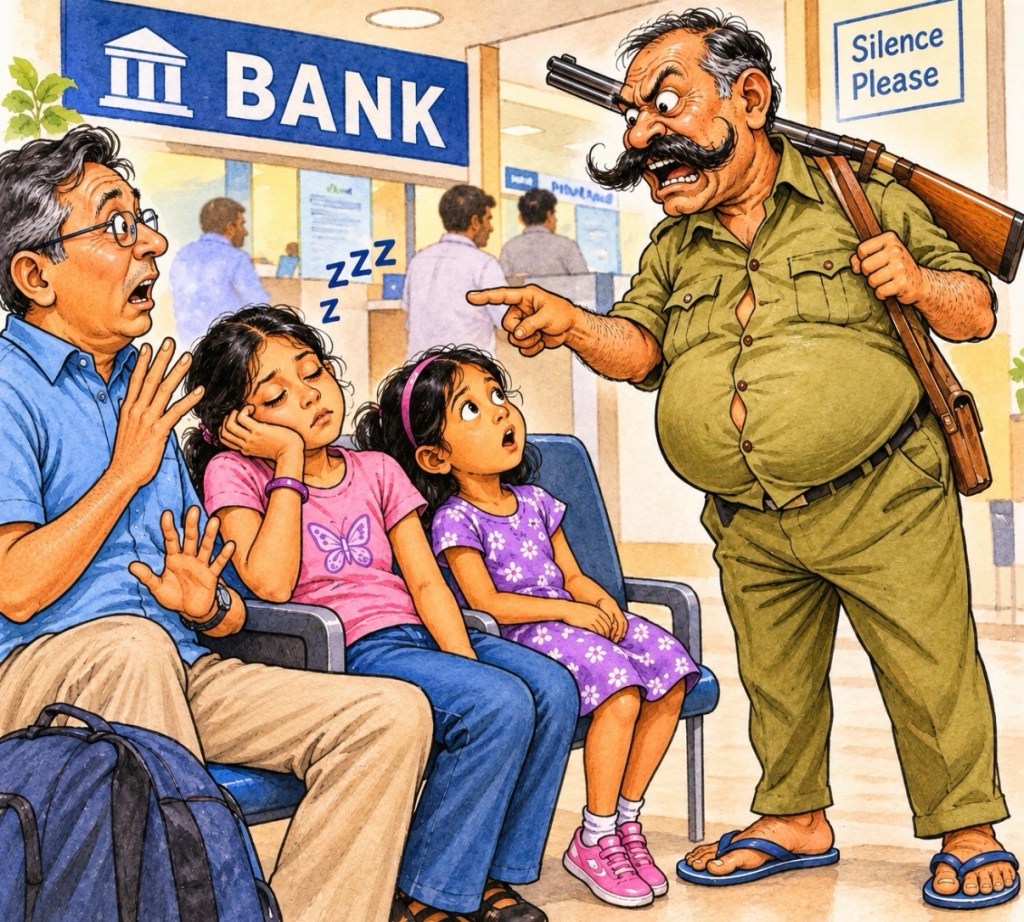
We had already been waiting for 20–30 minutes since receiving our token. Having arrived from the US only the previous day, we were all battling jet lag. Ramya, in particular, was having a tough time keeping her eyes open. I noticed that she had actually dozed off.
Just then, I saw the security guard approaching us.
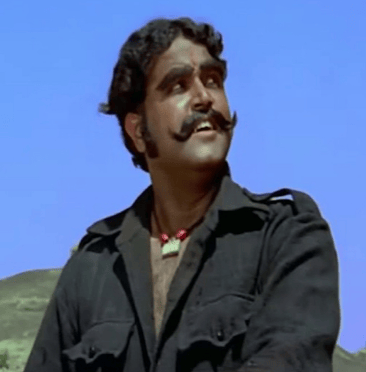
He was probably in his 60s, dressed in olive-green trousers and a matching shirt that was conspicuously untucked. He sported a very distinctive handlebar moustache. A long double-barrel gun, which looked like a World War I antique, was loosely slung over his shoulder. He probably thought he looked suitably menacing.
To us, however, the entire ensemble was quite something. His pot belly was putting considerable strain on the buttons of his shirt, and his flip-flops completed the picture. He reminded me of one of those dacoits from the Bollywood blockbuster of the 70s, Sholay.
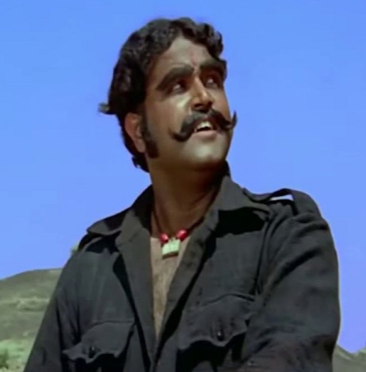
The guard approached us, looked at Ramya and sternly rebuked her:
“You should not sleep in a bank!”
What?!
Was this some sort of joke? I was quite certain he had just invented this rule on the spot. Ramya woke up with a shocked, bewildered look, probably wondering what crime she had committed by simply falling asleep! The rest of us were equally taken aback, though I must admit I was struggling to keep a straight face.
I was already not particularly enamored of this bank, and this was the final straw. We eventually closed our accounts and moved them to a more modern private bank that offered online access.
Almost 25 years later, we still reminisce about that encounter and have a huge laugh. Ramya’s bewildered expression and the guard’s stern announcement have become part of our family folklore. It’s amazing how a seemingly insignificant incident can provide so much family entertainment for so many years!
And here’s the funny part. Today, when I visited a similar government bank again, I spotted another security guard in an almost identical cartoonish getup (including the double-barrel gun!). The only noticeable improvement was that this gentleman was wearing proper shoes instead of flip-flops!
Apparently, the bank has managed to modernize its security footwear standards over the years. I wonder if the no-sleeping rule is still in force!
That guard may have forgotten us long ago, but thanks to him, Ramya has been reminded for 25 years that sleeping in a bank is a serious offence!

